Perimenopause vs Menopause vs Postmenopause: Your Complete Guide

Medical Disclaimer: This article is for general informational purposes only and does not constitute medical advice. Always consult a qualified healthcare professional about your individual circumstances before making changes to your health management.
Quick Answer
Perimenopause is the transition phase leading up to menopause, lasting on average 4 to 6 years, though it can stretch to 10. Menopause itself is a single milestone: 12 consecutive months without a period. Everything after that is postmenopause. Most symptoms women associate with “menopause” actually begin during perimenopause.
“What is the difference between perimenopause and menopause” is one of the most common questions we get asked by women.
Many women sense something is changing in their bodies long before anyone uses the word menopause. Sleep starts suffering. PMS feels more intense than it used to. Periods are arriving differently. Energy is harder to sustain. Mood feels less predictable. The assumption is that this is either stress, ageing, or simply what life looks like in your forties.
In most cases, it is something more specific: the menopause transition has already begun.
Understanding exactly where you are on that journey, and why your body is responding the way it is, makes an enormous difference. It turns confusion into clarity. It explains why two women the same age can have completely different experiences. And it helps you make informed decisions about what your body needs right now.
This guide walks you through each stage of the menopause transition: what is happening hormonally, what symptoms to expect, and how to recognise which stage you are in.
Menopause Is One Day
This is the part most women are never told.
Menopause itself is not a phase that lasts years. It is a single milestone, officially defined as the point at which a woman has gone 12 consecutive months without a menstrual period. The day that 12-month mark is reached is the day of menopause.
Everything before that point is perimenopause. Everything after is postmenopause.
In Australia, the average age of menopause is approximately 51, though there is a broad normal range. Some women reach menopause in their mid-forties. Others continue menstruating well into their mid-fifties. Genetics plays a strong role: research suggests that 70 to 80% of the variation in menopausal age is inherited, which means the women in your family tree can offer valuable clues about your own likely timeline.1 2
One quirk worth knowing: menopause can only be confirmed retrospectively. You cannot know you have reached it until the full 12 months have passed. Until then, you are still in perimenopause, regardless of how few periods you are having.
The map of the menopause transition looks like this:
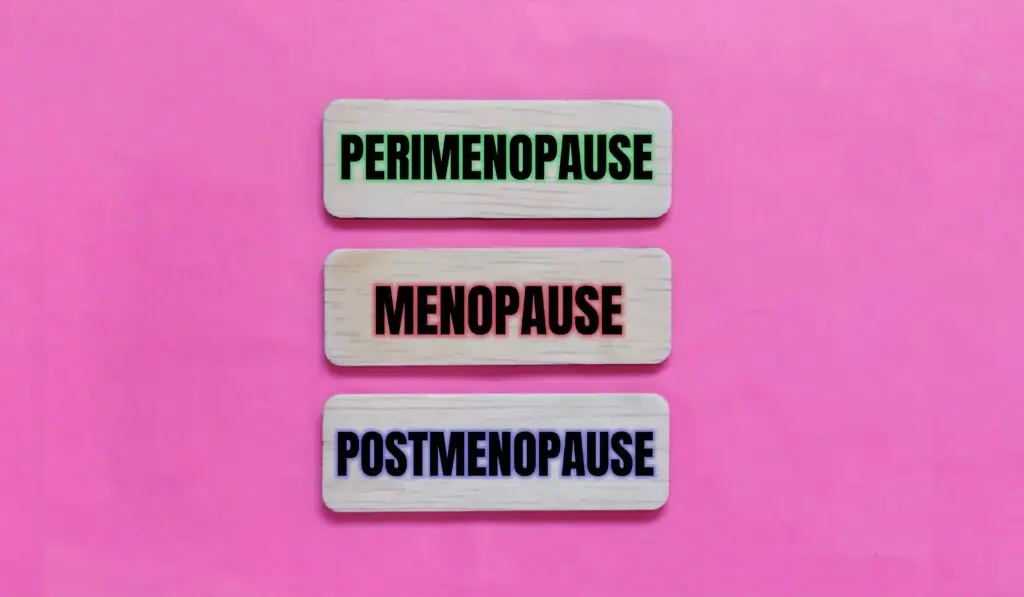
Reproductive Years → Early Perimenopause → Late Perimenopause → Menopause → Postmenopause
Each stage has its own hormonal patterns, its own set of symptoms, and its own challenges. Understanding the differences is not just academic. It helps explain what is happening in your body and what kind of support actually makes sense.
The Hormonal Shift Driving Everything
To understand the stages, you need a basic picture of what is happening inside the ovaries.
Women are born with all the eggs they will ever have. Over time, the number and quality of those eggs gradually decline. As the ovaries age, hormone production becomes less predictable. This process does not happen overnight. It unfolds over years, creating the hormonal fluctuations that define perimenopause.
Three hormones matter most here:
Oestrogen influences almost every system in the body. Oestrogen receptors are found throughout the brain, bones, blood vessels, muscles, skin, liver and immune system. This is why changes in oestrogen can affect everything from mood and memory to cholesterol levels, body composition, joints, gut health and bone density.
Progesterone is produced after ovulation. It helps regulate menstrual cycles, supports sleep, and has a calming effect on the nervous system. As ovulation becomes less reliable during perimenopause, progesterone production becomes less reliable too.
Testosterone is produced in small amounts by women throughout life. It contributes to libido, motivation, confidence, strength and muscle maintenance. Its gradual decline through the menopause transition is often underestimated.
One of the most important things to understand is that symptoms are not driven by a single hormone acting in isolation. They are shaped by the relationship between these three hormones. During perimenopause, that relationship becomes unpredictable. One hormone may surge while another falls. One month can feel relatively stable. The next can feel completely chaotic. This is the defining feature of the transition.
Early Perimenopause: The Subtle Beginning
Early perimenopause can begin anywhere from 4 to 7 years before menopause, which means it can start as early as the late thirties or as late as the late forties.3
At this stage, periods are still arriving regularly. What changes is the pattern.
According to the Stages of Reproductive Aging Workshop (STRAW) framework, one of the earliest markers of perimenopause is a persistent shortening of the menstrual cycle compared to a woman’s previous pattern.3 A woman who has always had a 28-day cycle might notice her periods arriving every 26 days. The change is subtle enough to dismiss, yet it can be one of the first signs that the hormonal environment is beginning to shift.
Beneath that subtle surface, significant changes are underway. Progesterone is often the first hormone to become inconsistent. As ovulation becomes less reliable, progesterone production varies from month to month. At the same time, oestrogen levels can actually be higher than during a woman’s thirties, or at least erratic, rather than steadily declining. This changing ratio between oestrogen and progesterone is what drives many early symptoms.
What You Might Notice in Early Perimenopause
- Your cycle has shortened (for example, from 28 days to 26 days)
- Periods still arrive regularly but feel different from previous years
- PMS has become more intense or harder to manage
- Breast tenderness increases before your period
- Periods have become heavier
- Anxiety, irritability or mood changes feel more noticeable
- Sleep has become lighter or more disrupted
- You wake during the night, particularly in the second half of your cycle
- Headaches or migraines have become more frequent around your period
- You feel less resilient to stress than you used to
Because periods are still regular, early perimenopause is commonly missed. Many women look perfectly healthy from the outside. Blood tests may appear normal. They are still managing full careers and family responsibilities. Yet internally, something feels different. That instinct is often correct.
Late Perimenopause: When the Signals Get Louder
Late perimenopause is where the hormonal changes become harder to ignore, and where most women begin connecting their experience to the word “menopause.”
The defining marker, according to the STRAW framework, is a persistent variation in cycle length of more than seven days.3 A woman who once knew exactly when her period would arrive may find her cycles now range from 26 days to 45 days, with no reliable pattern. Some periods are heavier than ever before. Others are surprisingly light. Some months a period does not come at all, only to return a few months later.
Beneath these changes, oestrogen itself has become unpredictable. During early perimenopause, oestrogen could be relatively high, with progesterone declining. During late perimenopause, oestrogen surges and falls more dramatically. This is why symptoms can seem almost contradictory from one month to the next.
When oestrogen is relatively high, women may experience bloating, breast tenderness, heavy periods and emotional sensitivity. When oestrogen falls, hot flushes appear, sleep becomes fragmented, joints ache and mood dips. One month can feel almost normal. The next can feel overwhelming.
Progesterone continues its overall decline as ovulation becomes increasingly infrequent. Because progesterone has a calming effect on the brain and nervous system, its absence is often felt profoundly. Women describe feeling more anxious, more easily overwhelmed, and less resilient than they used to.
What You Might Notice in Late Perimenopause
- Your menstrual cycle varies by more than seven days from month to month
- Periods have become noticeably heavier, lighter, longer, shorter or more unpredictable
- You occasionally skip periods
- Hot flushes have appeared
- Night sweats are disrupting sleep
- Brain fog, forgetfulness or difficulty concentrating have become more noticeable
- Anxiety or low mood have increased
- Joint aches and stiffness have emerged
- Weight gain around the abdomen has become more noticeable
- Libido has declined
- Vaginal dryness or urinary symptoms have begun appearing
- You feel slower to recover from physical or emotional demands
“Late perimenopause is often the most challenging period of the transition. Heavier periods during this stage also increase iron loss, as iron deficiency is one of the most commonly overlooked reasons fatigue worsens at this time. It is also temporary. Understanding that the unpredictability reflects a genuine hormonal recalibration, rather than something going wrong, can make an enormous difference to how a woman experiences it.
“In my experience working with women in midlife, late perimenopause is the stage where most women finally connect the dots. They have often been living with symptoms for two or three years by this point. The worsening sleep, the anxiety, the cycle changes, but because their periods were still arriving, nobody had named it. Knowing you are in late perimenopause does not change what is happening, but it changes everything about how you respond to it.”
— Amelia Phillips, Nutritionist & Exercise Scientist
Menopause: The Milestone
After years of hormonal fluctuations and changing cycles, menopause itself is surprisingly simple to define.
Menopause is the point at which a woman has gone 12 consecutive months without a menstrual period. That is it. A single milestone, not a phase.
By the time menopause arrives, much of the hormonal turbulence of late perimenopause has already passed. Oestrogen and progesterone levels fall significantly and settle into a lower, more stable range than during the reproductive years. The dramatic rises and falls of perimenopause become less common.
Many women describe reaching menopause as a relief. There are no more unpredictable periods, no more wondering whether a skipped period means menopause has finally arrived, and often fewer dramatic hormonal swings from one month to the next. The storm begins to settle.
It is worth knowing that menopause can only be confirmed in retrospect. Because it requires a full 12 consecutive months without a period, you cannot confirm it has happened until it has already passed.
Hallmarks of Menopause
- 12 consecutive months since your last menstrual period
- Periods have permanently ceased
- Oestrogen and progesterone levels have fallen significantly from reproductive-year levels
- Ovulation is no longer occurring
- Hormonal fluctuations begin to settle compared to late perimenopause
Postmenopause: A New Biological Chapter
If perimenopause is the storm season, postmenopause is the calm that follows.
Once menopause has been confirmed, a woman is postmenopausal for the rest of her life. Hormones are lower, but they are also far more stable than during perimenopause. The rollercoaster slows. Many women describe this stage as feeling more predictable and calmer than the years that preceded it.
That does not mean all symptoms disappear overnight. Some women continue to experience hot flushes, sleep disturbance, vaginal dryness or low libido in the postmenopausal years. But many find that symptoms become more consistent, and therefore more manageable.
The focus shifts. Rather than navigating fluctuating hormones, the priority becomes supporting the body in a lower-oestrogen environment for the long term.
This is where several health priorities become more important. Maintaining muscle mass supports metabolic health and healthy ageing. Bone health requires more deliberate attention as oestrogen is no longer offering the same level of protection. Cardiovascular risk increases. Maintaining insulin sensitivity becomes a greater priority. Brain health, mobility and physical independence become part of the longer-term picture.
None of this is meant to be confronting. Postmenopause is not a period of inevitable decline. It is a different biological stage, one that rewards women who understand how their bodies have changed and who take a proactive approach to their health.
Many women who come through the transition describe postmenopause as a time of greater confidence and self-awareness. The hormonal turbulence has passed. The priorities have clarified. The space to focus on long-term health opens up in a way that often was not possible during the peak years of the transition.
Hallmarks of Postmenopause
- More than 12 months since your last menstrual period
- Hormonal fluctuations feel less dramatic
- Symptoms have become more stable and predictable
- Focus shifts toward long-term health and healthy ageing
When Menopause Arrives Earlier Than Expected
Most women will experience menopause around the age of 51, but not everyone follows that timeline.
Early menopause refers to menopause occurring before the age of 45. Premature ovarian insufficiency (POI) occurs before the age of 40. For some women there is a known cause, including genetics, autoimmune conditions, chemotherapy, radiotherapy or surgery involving the ovaries. For many, no obvious cause is ever identified.
Surgical menopause occurs when both ovaries are removed. Unlike natural menopause, which unfolds gradually over years, surgical menopause is abrupt. Oestrogen, progesterone and testosterone levels fall rapidly, often producing symptoms that are more sudden and intense than those experienced during a natural transition.
The reason early menopause and POI are taken seriously by clinicians is that oestrogen plays important roles well beyond reproduction. It supports bone health, cardiovascular health, brain function and metabolic health. Losing that hormonal support earlier in life can carry longer-term health implications if it is not appropriately managed.
If menopause occurs before age 45, periods stop before age 40, or you experience significant menopause symptoms unexpectedly at a young age, it is worth discussing your situation with a healthcare professional experienced in menopause care.
A Note on Hormonal Contraception
One of the more frustrating aspects of identifying your stage is that hormonal contraception can mask the usual signals.
The contraceptive pill, hormonal IUDs, implants and other hormonal contraceptives can all alter bleeding patterns. Some women continue to have regular withdrawal bleeds. Others stop bleeding altogether. This makes it difficult to use menstrual patterns as a guide to where you are in the transition.
Hormonal contraception can also suppress some of the cycle changes that would otherwise provide early clues. The pill, for example, works by suppressing the natural cycle and delivering synthetic hormones, making it difficult to know what the ovaries are doing independently.
If you are using hormonal contraception and want to understand your menopausal status, your age, symptoms and medical history usually provide more useful information than bleeding patterns alone.
Can a Blood Test Tell You Where You Are?
This is one of the most common questions, and the answer is: sometimes, but it is more complicated than most people expect.
Many women assume a single blood test can confirm perimenopause. Perimenopause is a transition characterised by fluctuating hormones. Oestrogen, progesterone and follicle stimulating hormone (FSH) can vary dramatically from one month to the next. A test that comes back normal one month may look very different the following month.
For women over 45 with typical symptoms and changing cycles, the symptom pattern and menstrual history are often more informative than a single hormone measurement. For this reason, menopause is generally considered a clinical diagnosis rather than a laboratory one.
That does not mean testing has no value. Blood testing can be genuinely useful for women who are using hormonal contraception, who have had a hysterectomy, or who are suspected of having early menopause or POI. It can also help establish a baseline and provide insight into whether ovulation is still occurring.
More advanced testing options exist, including targeted blood panels, urinary hormone testing (such as DUTCH testing), and home hormone monitoring systems. These can provide useful additional data, particularly for women with complex symptoms. However, hormonal fluctuations during perimenopause mean results can vary considerably from month to month, and the additional information does not always change the approach.
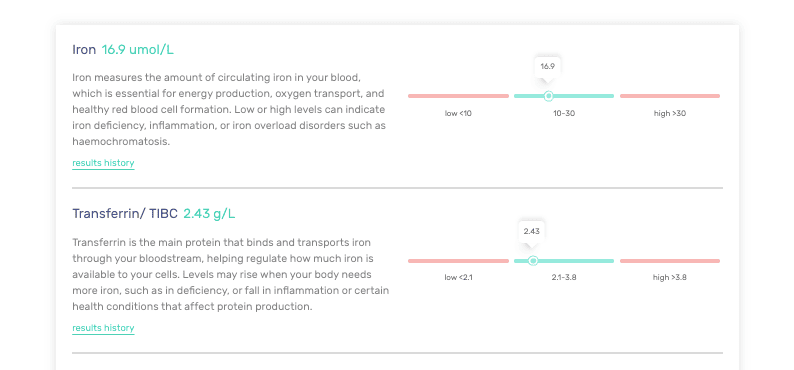
It is also worth remembering that many symptoms commonly attributed to menopause, including fatigue, brain fog, low mood, weight gain and poor sleep, can have other contributing factors. Thyroid function, iron levels, vitamin B12, insulin resistance and inflammation are all worth considering. This is why testing tends to be most useful when it looks at the whole picture rather than focusing on hormones alone.
Where Does HRT Fit?
Menopausal Hormone Therapy (commonly called HRT) is one of the most effective treatments available for many menopause symptoms. It involves replacing some of the hormones that naturally decline during the transition, most commonly oestrogen and progesterone, and where needed, testosterone.
HRT is particularly effective for hot flushes, night sweats, sleep disruption, vaginal dryness, genitourinary symptoms, mood and cognitive symptoms related to low hormone levels, and slowing postmenopausal bone loss. For women experiencing early menopause, POI or surgical menopause, it is often strongly considered given oestrogen’s broader role in supporting bone, cardiovascular and metabolic health.
HRT is not the right choice for every woman, nor is it the only option. The decision is personal and should be made in partnership with a healthcare professional who understands your symptoms, medical history and treatment goals.
Whether or not HRT is part of the picture, the foundations of good health matter at every stage: nutrition, movement, sleep, stress management, muscle health and metabolic health. These are not alternative options to hormones. They are the platform on which everything else works best.
Frequently Asked Questions
What is the difference between perimenopause and menopause?
Perimenopause is the transitional phase leading up to menopause, lasting on average 4 to 6 years. It begins when hormonal changes produce noticeable symptoms and cycle shifts, and it ends at the point of menopause. Menopause itself is a single milestone: 12 consecutive months without a menstrual period. Most of the symptoms women associate with “menopause,” including hot flushes, sleep disruption and mood changes, actually begin during perimenopause.
How do I know if I am in perimenopause?
There is no single test that confirms perimenopause. The most reliable approach is to pay attention to patterns: is your cycle length changing, is your PMS more intense, has your sleep or mood shifted? For women over 45, a combination of symptom pattern, menstrual history and age is often more informative than a hormone blood test alone, as hormones fluctuate considerably during this transition. Perimenopause can begin as early as the late thirties.
How long does perimenopause last?
Perimenopause typically lasts 4 to 6 years, though it can range from 1 year to more than 10. Most women experience some symptoms for several years before their final period. The duration varies significantly between individuals and is influenced by genetics, health history and other factors.
What are the first signs of perimenopause?
Early perimenopause often begins with subtle changes: a shortening of the menstrual cycle (for example, from 28 days to 26 days), heavier periods, more intense PMS, breast tenderness before periods, lighter or more disrupted sleep, and increased sensitivity to stress. Hot flushes and irregular periods tend to emerge later, in the late perimenopause stage.
Can I be in perimenopause if my periods are still regular?
Yes. In early perimenopause, periods often remain regular. What changes is the pattern: cycle length, flow, PMS intensity and the hormonal experience within the cycle. Significant hormonal shifts can be underway well before periods become irregular. The STRAW framework, the clinical staging tool used to identify the menopause transition, identifies early perimenopause as beginning while periods are still arriving regularly.3
What happens to hormones after menopause?
After menopause, oestrogen and progesterone levels settle into a lower, more stable range than during the reproductive years. They do not disappear entirely, but they are significantly lower than during the reproductive years. The dramatic fluctuations of perimenopause ease. Testosterone also continues a gradual long-term decline. This lower-hormone environment means that certain health priorities, particularly bone health, cardiovascular health, metabolic function and muscle maintenance, become more important in the postmenopausal years.
Is postmenopause better or worse than perimenopause?
For many women, postmenopause feels more manageable than late perimenopause, even if lower hormone levels bring their own challenges. The unpredictability that defines perimenopause tends to settle. Symptoms may continue, but they become more consistent and therefore easier to address. Many women describe greater confidence, clarity and a sense of freedom in this stage of life. The shift is less about one stage being “better” and more about a different set of priorities emerging.
The bottom line
Perimenopause, menopause and postmenopause are three distinct stages with different hormonal profiles, different symptoms and different health priorities. Perimenopause is the long transition, menopause is the milestone, and postmenopause is the chapter that follows. Most of the symptoms women attribute to “menopause” start well before that milestone, often years earlier. Knowing which stage you are in is the first step toward understanding what your body needs right now. If something feels different and has for a while, it probably is different. That awareness is the starting point for everything else.
Citations
1 Vink JM, Boomsma DI, et al. Heritability of age at natural menopause and shared genetics with other traits. Frontiers in Genetics. 2021;12:676546. PMID: 34691139. View on PubMed
2 Murabito JM, Yang Q, Fox C, et al. Heritability of Age at Natural Menopause in the Framingham Heart Study. Journal of Clinical Endocrinology & Metabolism. 2005;90(6):3427–3430. PMID: 15769979. View on PubMed
3 Harlow SD, et al. Executive summary of the Stages of Reproductive Aging Workshop + 10. Menopause. 2012;19(4):387–395. PMID: 22344196. View on PubMed